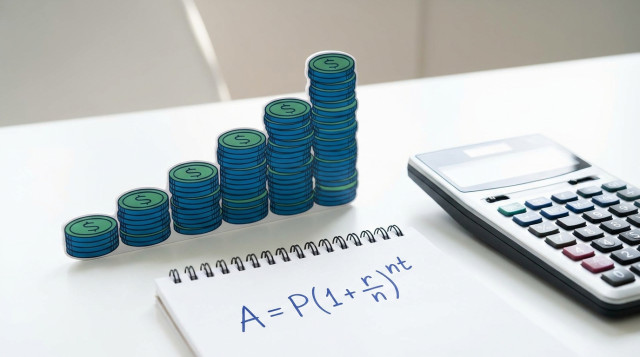

percentage change formula and what it’s used for
The percentage change formula measures the relative difference between a new value and an original value, expressed as a percentage. Use it to compare prices, test scores, population growth, financial returns, quantity changes in recipes, and any situation where you need to know how much something grew or shrank relative to its starting point.
percentage change formula
The standard percentage change formula is:
Percentage change = ((New − Original) / Original) × 100%
This formula gives a positive percentage for increases and a negative percentage for decreases. Put the original value in the denominator because you want the change relative to where you started.
step-by-step method to compute percentage change manually
- Identify the original value (starting value) and the new value (ending value).
- Subtract the original value from the new value to get the absolute change: New − Original.
- Divide the absolute change by the original value to get the relative change: (New − Original) / Original.
- Multiply the result by 100 to convert to a percentage: × 100%.
- Round or format the percentage as needed (one or two decimal places is common).
example 1 — price increase
Original price: $45. New price: $54.
- Absolute change = 54 − 45 = 9.
- Relative change = 9 / 45 = 0.2.
- Percentage change = 0.2 × 100% = 20%.
Interpretation: the price increased by 20% compared with the original price.
example 2 — drop in test score
Original score: 88. New score: 79.
- Absolute change = 79 − 88 = −9.
- Relative change = −9 / 88 ≈ −0.10227.
- Percentage change ≈ −10.23%.
Interpretation: the score decreased by about 10.23% relative to the original score.
special cases and important notes
- If the original value is zero, the formula is undefined because you can't divide by zero. Use absolute change or express the change in other terms (for example, report that value increased from 0 to X, or compute percentage of a different baseline).
- When both values are negative, the formula still works: subtraction and division follow normal algebraic rules. Interpret carefully: moving from −50 to −30 is an increase of 20, which equals a 40% increase relative to −50 (but negative baselines can be confusing).
- For decreases, the percentage change is negative. To state a decrease in plain language you can say "decreased by 12%" instead of giving a negative percentage.
- Large percentage changes over small original values can be misleading — always check the absolute numbers too.
how to reverse a percentage change (find the original or new value)
Use these variants of the formula when you know two of the three quantities:
find new value given original and percentage change
New = Original × (1 + PercentageChange/100)
Example: original 200 and a 15% increase → New = 200 × (1 + 0.15) = 230.
find original value given new and percentage change
Original = New / (1 + PercentageChange/100)
Example: new salary 46,000 after a 10% raise → Original = 46,000 / 1.10 ≈ 41,818.18.
compound percentage change over multiple periods
When a value changes by different percentages across several periods, compute the compounded result multiplicatively rather than summing percentages.
Formula for final value after n periods: Final = Original × (1 + r1) × (1 + r2) × ... × (1 + rn), where each r is the period rate as a decimal.
example — compounded quarterly changes
Original sales: 1,000. Quarter 1: +5% (0.05). Quarter 2: −3% (−0.03). Quarter 3: +4% (0.04).
- Final = 1,000 × 1.05 × 0.97 × 1.04 ≈ 1,056.96.
- Total percentage change = (Final − Original)/Original × 100% ≈ 5.696%.
Interpretation: after the sequence of changes, total growth is about 5.7%, not simply 5% − 3% + 4% = 6% (which would be incorrect).
common mistakes to avoid
- Dividing by the new value instead of the original. Always use the original (starting) value as the denominator when reporting change relative to the start.
- Adding percentage changes across periods as if they were absolute increments — use compounding when periods are sequential.
- Using percentage change with zero or near-zero baselines without noting the absolute difference. A change from 0.1 to 1.1 is a 900% increase but the absolute change is only 1.0.
- Failing to state whether a percentage is increase or decrease when giving a negative sign might confuse non-technical readers.
how to use an online percentage change calculator
Most percentage change calculators ask for two inputs: original value and new value. Enter the numbers, press calculate, and the tool returns the absolute change and the percentage change. Use an online calculator when you want a quick, error-free result for large or many calculations.
Tip: verify the calculator's method if it includes an option to choose the baseline (original vs. new) — some tools offer alternative conventions.
Try Calculatorr's tools for quick percentage change checks and related conversions at Calculatorr.
practical examples across contexts
personal finance — budget spending
If monthly grocery spending goes from $320 to $400:
- Absolute change = 80.
- Percentage change = 80 / 320 × 100% = 25%.
- Interpretation: groceries are costing 25% more than the original month.
health — weight loss target tracking
Starting weight 90 kg, new weight 84 kg:
- Absolute change = −6 kg.
- Percentage change = −6 / 90 × 100% ≈ −6.67%.
- Interpretation: a 6.67% weight loss relative to starting weight.
business — product price discount
Original price $120, discounted price $90:
- Absolute change = −30.
- Percentage change = −30 / 120 × 100% = −25%.
- Interpretation: a 25% discount off the original price.
how to present percentage change clearly
- Always state the baseline: "compared with the original value of X" so readers know the reference.
- Use positive language for increases and specify "decrease" for negative changes to avoid confusion.
- Include absolute values alongside percentages to provide scale and avoid misleading impressions.
quick checklist before reporting a percentage change
- Confirm original and new values are correct and in the same units.
- Check for division by zero and choose an alternative description if original = 0.
- Decide whether to compound multiple period changes or to present period-by-period changes separately.
- Round to an appropriate number of decimal places for your audience.
final tips and links
Percentage change is a simple but powerful metric. Use it with care: always state the baseline, include absolute numbers when helpful, and compound rates across time rather than summing percentages. For instant results, use Calculatorr’s online percentage and related calculators at Calculatorr to avoid manual mistakes and speed up analysis.