
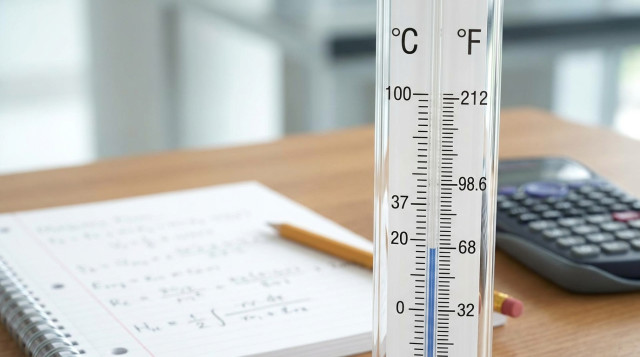
how to convert Celsius to Fahrenheit and back: common formulas
The Celsius to Fahrenheit conversion is a basic temperature conversion used in weather, cooking, science and everyday life. Use the Celsius to Fahrenheit formula and the inverse Fahrenheit to Celsius formula to switch units quickly and accurately.
Formulas
- Celsius (°C) to Fahrenheit (°F): °F = (°C × 9/5) + 32
- Fahrenheit (°F) to Celsius (°C): °C = (°F − 32) × 5/9
how to convert Celsius to Fahrenheit step by step
Follow these steps to convert any Celsius temperature to Fahrenheit manually.
- Multiply the Celsius value by 9/5 (or 1.8).
- Add 32 to the product.
- Round the result as needed for your application.
Worked example: 20°C to °F
Step 1: 20 × 9/5 = 20 × 1.8 = 36
Step 2: 36 + 32 = 68
Result: 20°C = 68°F
Worked example: −10°C to °F (negative temperatures)
Step 1: −10 × 9/5 = −10 × 1.8 = −18
Step 2: −18 + 32 = 14
Result: −10°C = 14°F
how to convert Fahrenheit to Celsius step by step
Convert Fahrenheit back to Celsius using the inverse formula. This is useful for interpreting weather forecasts or recipes given in Fahrenheit.
- Subtract 32 from the Fahrenheit value.
- Multiply the result by 5/9 (or ≈0.5556).
- Round appropriately.
Worked example: 98.6°F to °C (body temperature)
Step 1: 98.6 − 32 = 66.6
Step 2: 66.6 × 5/9 = 66.6 × 0.555555... = 37.0 (rounded)
Result: 98.6°F ≈ 37.0°C
Worked example: 14°F to °C (from previous example)
Step 1: 14 − 32 = −18
Step 2: −18 × 5/9 = −10
Result: 14°F = −10°C
quick reference table: common conversions
| Celsius (°C) | Fahrenheit (°F) |
|---|---|
| −40 | −40 |
| −10 | 14 |
| 0 | 32 |
| 10 | 50 |
| 20 | 68 |
| 37 | 98.6 |
| 100 | 212 |
how to use an online Celsius to Fahrenheit converter
Online converters automate the steps and are handy when you need many conversions or high precision. To use one:
- Enter the temperature value in the input field labeled either Celsius or Fahrenheit.
- Select the direction of conversion if required (°C → °F or °F → °C).
- Click convert or the equivalent button; the result appears instantly.
For a ready tool, visit the calculator section on the site and use the temperature converter at https://calculatorr.com/ for accurate, immediate results and extra features like batch conversion and decimal precision.
how to handle rounding and precision
Decide the required precision based on context:
- Weather forecasts: round to 1 decimal or whole number depending on local practice.
- Scientific work: use at least two decimal places or match significant figures from measurements.
- Cooking: 1 degree precision is usually enough.
To round correctly, perform the exact arithmetic first and then round the final number. Avoid rounding intermediate steps to reduce cumulative error.
interpretation: what the numbers mean in practice
Understanding typical temperature ranges helps interpret converted values:
- Freezing point of water: 0°C = 32°F.
- Comfortable room temperature: ≈20–22°C = 68–72°F.
- Human normal body temperature: ≈37°C = 98.6°F.
- Boiling point of water (at sea level): 100°C = 212°F.
common mistakes and how to avoid them
- Forgetting to subtract 32 when converting from Fahrenheit to Celsius. Always do the subtraction step first.
- Using 9/5 as 1.9 instead of 1.8. 9/5 = 1.8 exactly; using 1.9 leads to significant error at higher temperatures.
- Rounding too early. Keep full precision until the final result.
- Mixing up the direction of conversion. Check the input unit label before applying a formula.
converting fractional or decimal temperatures
The formulas work exactly the same with decimals. Example: convert 36.6°C (a typical body temperature measurement) to Fahrenheit.
36.6 × 9/5 = 36.6 × 1.8 = 65.88; 65.88 + 32 = 97.88°F. Rounded to one decimal: 97.9°F.
batch conversions and spreadsheets
For many values, use a spreadsheet. Enter the Celsius values in a column and use a formula in the adjacent column:
- In Excel or Google Sheets, for Celsius to Fahrenheit: =A2*9/5+32
- For Fahrenheit to Celsius: =(A2-32)*5/9
Drag the formula down the column to convert lists quickly. This method is ideal for datasets like climate records or recipe adjustments.
useful tips and practical examples
- If you need a fast mental estimate: multiply Celsius by 2 and add 30 for a rough Fahrenheit approximation. Example: 20°C ≈ (20×2)+30 = 70°F (actual 68°F). Good for quick, non-critical estimates.
- Remember the special point −40 where both scales match: −40°C = −40°F.
- High-precision needs: use a calculator or the online converter at https://calculatorr.com/ to avoid manual rounding mistakes.
when to use each scale
Use Celsius for most scientific and international applications. Fahrenheit remains common for everyday weather and thermostats in a few countries. Convert values when sharing information internationally so recipients can understand the numbers immediately.
example: converting a weather forecast
A forecast shows 75°F for tomorrow. Convert to Celsius: (75 − 32) × 5/9 = 43 × 5/9 = 23.888... → 23.9°C. Report as 24°C if whole-number rounding is preferred.
With the formulas and examples above you can convert temperatures accurately by hand, in spreadsheets, or with an online converter. Use the quick mental trick for fast estimates and the exact formulas when precision matters.