
how to calculate roof wind load is essential when designing or verifying roof structures, assessing damage risk, or planning repairs. This guide explains what roof wind load is, the formulas used, step-by-step manual calculations, a practical example with numbers, how to use an online calculator, and how to interpret results for safe decisions.
what is roof wind load and why calculate it
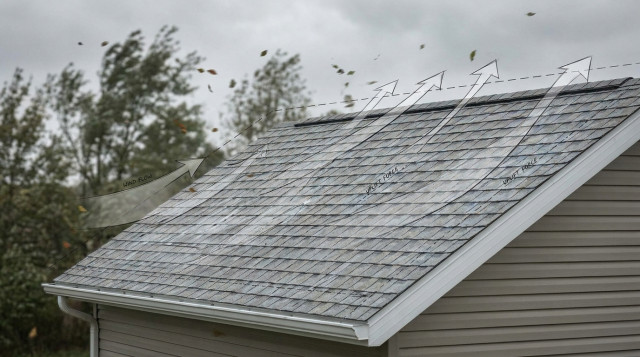
Roof wind load is the pressure exerted by wind on a roof surface. It includes positive pressures (wind pushing on the roof) and negative pressures (suction or uplift). Calculating roof wind load helps determine structural requirements for rafters, trusses, fasteners, and roofing material. It also informs safety measures in high-wind regions and helps estimate potential damage during severe storms.
basic concepts and units used in wind load calculations
- Wind pressure (p): force per unit area, typically in Pascals (Pa) or pounds per square foot (psf).
- Wind speed (V): usually given as a basic wind speed in meters per second (m/s) or miles per hour (mph).
- Exposure category: describes surrounding terrain (open, suburban, urban) that affects wind profile.
- Importance factor (I): adjusts for building use (higher for essential facilities).
- Topographic factor (Kzt): accounts for hills or escarpments that amplify wind.
standard simplified formula to estimate roof wind pressure
For a practical, conservative estimate use the dynamic pressure formula:
basic formula
p = 0.5 * rho * V^2 * C
- p = wind pressure (N/m2 or Pa)
- rho = air density (~1.225 kg/m3 at sea level)
- V = wind speed (m/s)
- C = coefficient combining exposure, gust factor, and pressure coefficient for roof shape (dimensionless)
This formula calculates the dynamic pressure from wind velocity. For building design, codes translate wind speed into design pressures using additional factors; however the dynamic pressure formula gives a clear physical basis and a good engineering estimate for many practical uses.
step-by-step manual calculation of roof wind load
- Determine basic wind speed (V). Use local data, building code values, or estimates for your region. Convert units to m/s if needed (1 mph = 0.44704 m/s).
- Choose air density (rho). Use 1.225 kg/m3 for sea-level average. For high elevations use a slightly lower value.
- Select coefficient C. For a conservative estimate use C between 0.6 and 2.0 depending on roof slope, shape and exposure. Typical guidance:
- Low-slope, flat roof, enclosed building: C ≈ 1.0–1.5
- Pitched roof, common residential shapes: C ≈ 0.8–1.2
- High uplift zones (eaves, ridges): local pressure coefficients can be >1.5
- Compute dynamic pressure: p = 0.5 * rho * V2 * C
- Convert pressure to desired units: 1 Pa = 0.0208854 psf (pounds per square foot). Multiply Pa by 0.0208854 to get psf.
- Apply safety/importance factors if needed (multiply p by I or by code-required factors).
worked example: estimating roof wind load for a residential roof
Scenario: A small house located in a suburban area with typical exposure. Use a conservative approach to estimate uplift pressure for design checks.
- Basic wind speed: 120 mph (convert to m/s)
- rho (air density): 1.225 kg/m3
- C (combined coefficient): 1.1 (pitches and some uplift at edges)
step 1 — convert wind speed
V = 120 mph × 0.44704 = 53.6448 m/s
step 2 — compute p in Pascals
p = 0.5 × 1.225 × (53.6448)2 × 1.1
First compute V2 = 2878.2 (approx)
p ≈ 0.5 × 1.225 × 2878.2 × 1.1 = 0.6125 × 2878.2 × 1.1
p ≈ 0.6125 × 3166.02 = 1939.7 Pa (approx)
step 3 — convert to psf
p_psf = 1939.7 Pa × 0.0208854 ≈ 40.5 psf
interpretation
An approximate design pressure of 1939.7 Pa (40.5 psf) indicates the roof must resist uplift forces of about 40.5 pounds per square foot under the assumed wind speed and coefficient. Local building codes may require adjustments (gust factors, exposure categories, partial factors). Use this estimate to check fastening schedules, connector capacities and roof diaphragm strength.
how to refine the calculation using code-based methods
Building codes (such as ASCE 7, Eurocode EN 1991-1-4 and others) provide detailed procedures: design wind speed maps, exposure categories, gust factors, and specific pressure coefficients for roof zones (eaves, ridges, corners, field). For accurate design, follow the applicable code for your location and structure type. The simplified dynamic-pressure approach above is useful for quick checks and preliminary estimates.
common errors and how to avoid them
- Using peak gusts directly without a gust factor or code guidance — use code-specified conversion or a conservative coefficient instead of raw gusts.
- Wrong unit conversions — always convert mph to m/s and Pa to psf carefully.
- Ignoring exposure — a roof in open terrain or near a cliff will experience higher pressures than one in an urban area.
- Applying uniform pressure across the whole roof — uplift varies by zone; edges and corners typically have higher suction.
- Neglecting local topography — hills or escarpments can amplify wind speeds (apply a topographic factor).
how to use an online roof wind load calculator
Many online calculators let you input wind speed, exposure, roof slope and building dimensions to get zone pressures. To use them effectively:
- Enter the basic wind speed in the requested units (mph or m/s).
- Select exposure category (B, C, D or similar) according to surroundings.
- Provide roof slope and building dimensions so the tool can assign pressure zones.
- Choose any importance or safety factors if the calculator supports them.
- Review results zone by zone and compare with fastener and connector capacities.
Calculatorr offers quick calculation tools and explanations to support manual checks — visit the main site for related calculators and guides that complement these steps.
practical advice: applying results to strengthen a roof
- Compare calculated uplift pressures with manufacturer-rated fastener uplift capacities and spacing.
- Reinforce roof edges and corners where pressures are highest; use additional straps or hold-downs.
- Inspect roof sheathing and connections; replace or add fasteners where capacity is insufficient.
- Consider increasing roof diaphragm stiffness or adding continuous ties to walls.
- For major upgrades, consult a licensed structural engineer and follow applicable building codes.
quick reference conversions and coefficients
| Quantity | Conversion / Typical value |
|---|---|
| 1 mph to m/s | 0.44704 |
| 1 Pa to psf | 0.0208854 |
| Air density (sea level) | 1.225 kg/m3 |
| Typical coefficient C (conservative) | 0.8–1.5 (depends on roof shape & zone) |
what the numbers mean: interpreting results
If your calculated pressure is low (for example, under 10 psf), standard residential fasteners and sheathing may be adequate. Moderate values (10–30 psf) suggest checking fastener spacing and edge reinforcement. High values (over 30–40 psf) require robust connections, structural straps, and possibly redesign by an engineer. Always compare pressures to tested capacities of roofing materials and connectors, not only to subjective impressions.
next steps and when to consult a professional
Use the manual method described here for preliminary checks, emergency assessments, or to estimate reinforcement needs. For permit drawings, major renovations, or when calculated pressures approach or exceed connector ratings, hire a licensed structural engineer. They will use code-compliant methods and ensure safety margins are met.
For fast, accurate conversions and a starting estimate, try a roof wind load calculator on Calculatorr: enter wind speed, exposure and roof details to get zone pressures and quick guidance for design checks.