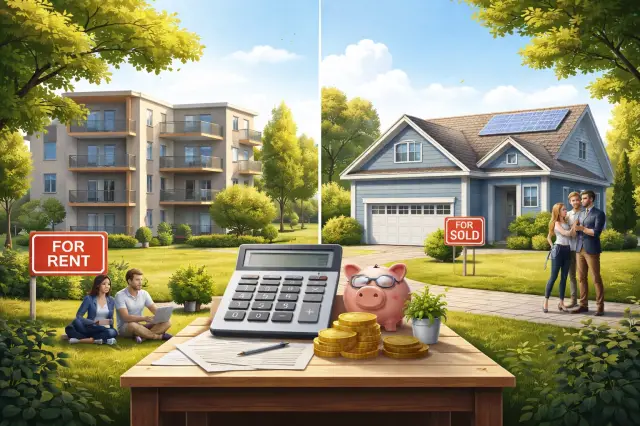
Is it better to rent or buy in 2026 is one of the most common financial questions people are asking today. Rising interest rates, fluctuating home prices, inflation, and remote work trends have made housing decisions more complex than ever.
Choosing between renting and buying is no longer just an emotional choice. It is a long-term financial decision that impacts your savings, lifestyle, mobility, and future wealth. The good news is that you no longer have to guess. With tools like the Rent vs Buy Calculator, you can compare real numbers instead of assumptions.
This guide breaks down the rent vs buy decision in 2026 using practical examples, real-life scenarios, and step-by-step explanations of how to use free calculators on Calculatorr.com to find the option that makes sense for you.
Why the Rent vs Buy Decision Matters More in 2026
The housing market in 2026 is shaped by several global and personal factors that did not exist a decade ago.
Some of the most important changes include:
-
Higher average mortgage interest rates compared to pre-2020 levels
-
Increased home maintenance and insurance costs
-
Greater job mobility and remote work opportunities
-
Rising rental prices in urban areas
-
Growing awareness of opportunity cost and investing alternatives
In the past, buying was often seen as the “always better” option. In 2026, that belief no longer holds true for everyone.
The smartest choice depends on how long you plan to stay, how much cash you have, your income stability, and how you plan to use your money over time.
Understanding the True Cost of Renting
Renting is often viewed as “throwing money away,” but that is an oversimplification. Renting comes with both direct and indirect financial benefits.
Key Costs of Renting
When renting, your main costs include:
-
Monthly rent
-
Renter’s insurance
-
Possible rent increases over time
-
Utilities not included in rent
However, renters avoid many expenses that homeowners face.
Financial Advantages of Renting
Renting may make sense in 2026 if:
-
You plan to move within the next 2 to 5 years
-
Your job or income is unstable
-
You prefer flexibility and mobility
-
You want to invest your savings elsewhere
Renters do not pay for:
-
Property taxes
-
Major repairs
-
Homeowners insurance
-
Maintenance and renovations
This means your monthly housing cost is predictable, which can be valuable during uncertain economic periods.
Understanding the True Cost of Buying a Home
Buying a home is not just about the mortgage payment. Many first-time buyers underestimate the real cost of ownership.
Key Costs of Buying
Homeownership typically includes:
-
Mortgage payment
-
Property taxes
-
Homeowners insurance
-
Maintenance and repairs
-
HOA fees (if applicable)
-
Closing costs
-
Opportunity cost of down payment
In 2026, maintenance and insurance costs have increased significantly in many regions, making it essential to calculate the full picture.
Financial Advantages of Buying
Buying may be the better choice if:
-
You plan to stay in the home long-term
-
You have a stable income
-
You can afford a solid down payment
-
You want to build equity over time
Over the long run, buying can help protect against rising rents and may offer appreciation benefits depending on the market.
How Long You Plan to Stay Is the Key Factor
One of the most important variables in the rent vs buy equation is time.
As a general rule:
-
Short-term stay (under 3 years): Renting is often cheaper
-
Medium-term stay (3–7 years): Depends on market conditions
-
Long-term stay (7+ years): Buying often becomes more favorable
This is because upfront buying costs are spread over time. The longer you stay, the more those costs are justified.
This is exactly where a rent vs buy calculator becomes essential.
How to Use the Rent vs Buy Calculator Step by Step
Step 1 Enter Your Monthly Rent
Input your current or expected monthly rent. Include only rent, not utilities.
Step 2 Enter Home Purchase Details
You will need to provide:
-
Home purchase price
-
Down payment amount
-
Mortgage interest rate
-
Loan term (usually 30 years)
Step 3 Add Ownership Costs
Include realistic estimates for:
-
Annual property taxes
-
Insurance
-
Maintenance costs
-
HOA fees
Many people underestimate this step. In 2026, maintenance is often 1 to 2 percent of the home value per year.
Step 4 Set Your Time Horizon
Enter how long you plan to stay in the home or rental. This is one of the most impactful inputs.
Step 5 Review the Results
The calculator shows:
-
Total cost of renting over time
-
Total cost of buying over time
-
Break-even point
-
Which option is cheaper based on your inputs
This>Real-Life Scenarios Rent vs Buy in 2026
Scenario 1 Young Professional in a Major City
-
Monthly rent: $2,200
-
Home price: $550,000
-
Down payment: 10 percent
-
Planned stay: 3 years
Result: Renting is cheaper due to high purchase costs and short stay.
Scenario 2 Family Planning Long-Term Stability
-
Monthly rent: $1,800
-
Home price: $320,000
-
Down payment: 20 percent
-
Planned stay: 10 years
Result: Buying becomes significantly cheaper over time and builds equity.
Scenario 3 Remote Worker With Investment Goals
-
Monthly rent: $1,500
-
Home price: $400,000
-
Down payment invested instead
Result: Renting may win if investments outperform home appreciation.
Opportunity Cost The Factor Most People Ignore
One of the biggest mistakes in the rent vs buy debate is ignoring opportunity cost.
When you buy a home, your down payment money is locked into the property. When you rent, that money can be invested.
Emotional and Lifestyle Factors Still Matter
While numbers are critical, lifestyle cannot be ignored.
Buying may be better if you value:
-
Stability
-
Personalization of your home
-
Predictable long-term housing
Renting may be better if you value:
-
Flexibility
-
Lower responsibility
-
Ability to relocate easily
The best decision balances financial logic with personal priorities.