
Time is one of the few resources you cannot recover. Yet most people underestimate how much of it they waste every single week. Meetings that go nowhere, constant distractions, poor planning, and procrastination silently drain hours that could be used for work, rest, or personal growth.
Understanding where your time actually goes is the first step to improving productivity. This article offers a real productivity breakdown to help you calculate how much time you waste every week and how to reduce it using practical tools from Calculatorr.com.
By the end, you will not just feel more productive. You will be able to measure it.
Why We Underestimate Wasted Time
Most people believe they have a time management problem. In reality, they have a time awareness problem.
Small inefficiencies feel harmless in isolation. Five minutes on social media. Ten minutes checking emails again. A short break that turns into thirty minutes. These moments add up faster than expected.
Common reasons why wasted time goes unnoticed include:
-
Multitasking that reduces focus
-
Constant notifications and interruptions
-
Lack of clear priorities
-
Poor estimation of task duration
-
Procrastination disguised as preparation
Without measuring time objectively, it is impossible to know how much you are actually losing.
What Counts as Wasted Time
Not all non-working time is wasted. Rest, breaks, and leisure are essential. The problem appears when time is spent unconsciously or without intention.
Wasted time usually includes:
-
Repeated task switching
-
Unplanned scrolling or browsing
-
Meetings without outcomes
-
Waiting time caused by poor planning
-
Avoidance behaviors related to difficult tasks
The key difference is intention. Planned rest restores energy. Unplanned distractions drain it.
How Much Time Do You Really Have Each Week
Before analyzing wasted time, you need a realistic picture of your available time.
A week has 168 hours. Those hours are usually divided into:
-
Sleep
-
Work or study
-
Personal care
-
Family and social time
-
Free time
Many people believe they have no free time, but the issue is often how fragmented it is.
This is where measuring becomes essential.
Using the Time Cost Calculator to Measure Wasted Time
One of the most effective tools to identify time loss is the Time Cost Calculator available at Calculatorr.com.
You can access it here:
https://calculatorr.com/time-cost-calculator
This calculator allows you to assign time values to activities and visualize how much time they consume over days, weeks, and months.
How to Use the Time Cost Calculator
To get accurate results, follow these steps:
-
List daily activities that are not essential
-
Estimate how many minutes each activity takes
-
Enter the frequency per day or week
-
Review the total time consumed
Even rough estimates reveal surprising patterns.
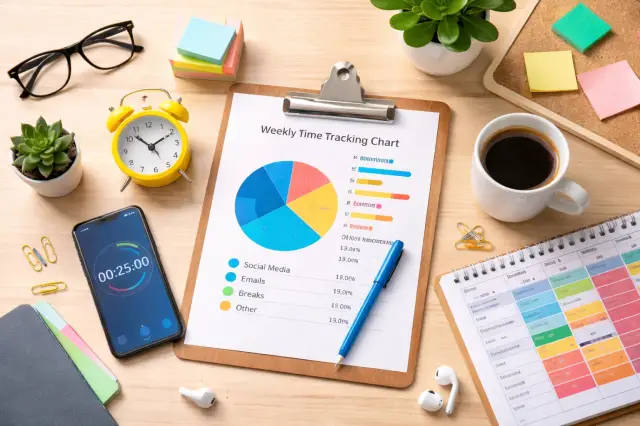
Example of a Weekly Breakdown
| Activity | Minutes per day | Weekly total |
|---|---|---|
| Social media scrolling | 40 | 4 hours 40 minutes |
| Email checking | 30 | 3 hours 30 minutes |
| Unplanned breaks | 25 | 2 hours 55 minutes |
| Total | — | 11 hours 5 minutes |
That is more than one full working day lost every week.
The Real Cost of Wasted Time
Time waste is not just about hours. It affects:
-
Income
-
Stress levels
-
Sleep quality
-
Personal goals
-
Mental health
For freelancers or hourly workers, wasted time also has a direct financial cost. If you earn $25 per hour, losing 10 hours per week equals $250 gone.
To understand this impact better, combine the Time Cost Calculator with the Net Salary Calculator:
https://calculatorr.com/net-salary-calculator
This helps translate time loss into real money.
Procrastination The Hidden Time Leak
Procrastination is one of the biggest contributors to wasted time. It often appears as harmless delays but creates anxiety and inefficiency.
You can measure its impact using the Procrastination Calculator:
https://calculatorr.com/procrastination-calculator
This tool helps estimate how much time you lose postponing tasks and how it affects deadlines.
Common Procrastination Patterns
-
Starting tasks without finishing them
-
Overplanning instead of executing
-
Waiting for perfect conditions
-
Avoiding uncomfortable tasks
Once identified, these patterns become easier to manage.
How Distractions Multiply Time Waste
Distractions do not just consume time directly. They increase the time needed to complete tasks.
Every interruption requires mental recovery. Studies show it can take over 20 minutes to regain focus after a distraction.
This means:
-
One notification can cost far more than one minute
-
Frequent interruptions create cognitive fatigue
-
Deep work becomes almost impossible
Tracking distractions helps you redesign your environment.
Using Time Blocking to Regain Control
After identifying wasted time, the next step is prevention. One effective method is time blocking.
Why Time Blocking Works
-
Reduces decision fatigue
-
Creates clear boundaries
-
Minimizes unplanned tasks
-
Encourages realistic scheduling
Instead of reacting to your day, you design it.
Pomodoro Technique and Focused Work
Another strategy to reduce wasted time is focused work sessions.
Working in short, focused intervals helps:
-
Reduce mental resistance
-
Increase task completion
-
Prevent burnout
-
Limit distractions
Combining Pomodoro sessions with time tracking offers measurable improvements.
Measuring Productivity Over Time
One week of data is useful. Multiple weeks reveal trends.
Tracking allows you to:
-
Identify recurring inefficiencies
-
Adjust schedules realistically
-
Set achievable goals
-
Measure improvement objectively
Productivity is not about doing more. It is about wasting less.
Real Life Case Study Weekly Time Recovery
Consider a remote worker who tracks time for one week and discovers:
-
12 hours wasted weekly
-
Most time lost in the afternoon
-
Major distractions from messaging apps
After implementing time blocking and Pomodoro sessions, wasted time drops to 5 hours per week.
That is a recovery of 7 hours. Over a year, that equals more than 360 hours regained.
How to Build a Personal Time Audit
To create your own productivity breakdown:
-
Track activities for 7 days
-
Use the Time Cost Calculator
-
Identify top three time wasters
-
Apply one improvement method
-
Measure again after two weeks
This process turns productivity into a measurable system, not a vague goal.