Understanding Sweat Rate and Its Impact on Performance
Sweat rate is the amount of fluid an individual loses through perspiration during a specific period of physical activity. This measurement is critical for athletes, fitness enthusiasts, and anyone engaging in strenuous labor, as it directly dictates how much fluid needs to be replaced to maintain physiological balance. When you exercise, your core temperature rises, and your body activates its primary cooling mechanism: sweating. As sweat evaporates from your skin, it dissipates heat, helping to prevent hyperthermia. However, this process leads to a decrease in blood volume and an increase in blood viscosity, which can strain the cardiovascular system and impair athletic performance.
Calculating your sweat rate allows you to move beyond generic hydration advice, such as the standard eight glasses of water a day, and develop a personalized hydration strategy. Every person has a unique sweat profile influenced by genetics, fitness level, and acclimatization to heat. Some individuals are heavy sweaters who lose liters of fluid in an hour, while others lose very little. By knowing your specific numbers, you can avoid both dehydration, which leads to fatigue and cramping, and hyponatremia, a dangerous condition caused by over-drinking plain water and diluting blood sodium levels. Utilizing resources at https://calculatorr.com/ can help you track these metrics over time to refine your training and recovery protocols.
The Scientific Formula to Calculate Sweat Rate
The mathematical approach to determining fluid loss is relatively straightforward, but it requires precision in measurement. The goal is to account for every gram of weight lost and every milliliter of fluid consumed during a timed exercise session. The standard formula used by sports scientists and coaches is as follows:
Sweat Rate = (Weight Before - Weight After + Fluid Intake - Urine Output) / Exercise Duration
In this equation, weight should ideally be measured in kilograms or grams to ensure accuracy, as 1 milliliter of water weighs exactly 1 gram. Fluid intake refers to the total volume of water or sports drinks consumed during the session, and urine output refers to any fluid lost through the bladder during the same period. The duration is typically expressed in hours to provide a result in liters per hour (L/h). This standardized unit makes it easy to compare different intensities and environmental conditions.
Step-by-Step Guide to Measuring Fluid Loss Manually
Preparing for the Test
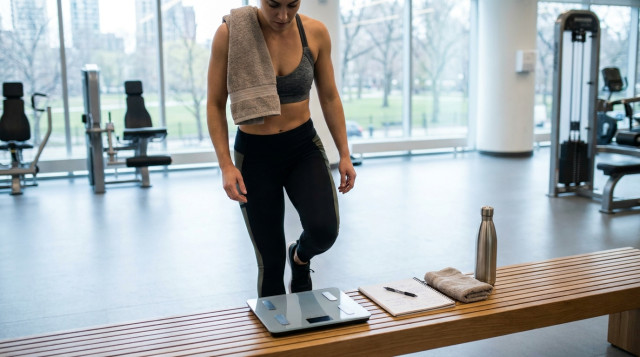
To get an accurate reading, you must eliminate as many variables as possible. Start by weighing yourself completely nude or in minimal clothing immediately before your workout. Ensure you have emptied your bladder before stepping on the scale. Record this weight as your 'Starting Weight'. If you plan to drink during the session, weigh your full water bottle in grams or measure the volume in milliliters. It is essential to use a digital scale that provides readings to at least one decimal point for the most reliable data.
During the Exercise Session
Perform your chosen activity at a consistent intensity for exactly 60 minutes. This duration is ideal because it simplifies the final calculation. If you exercise for a different amount of time, you will need to adjust the final division accordingly. During the session, try to avoid urinating. If you must go, you would ideally need to measure the volume of urine, which is often impractical outside of a laboratory setting. Therefore, most experts recommend performing the test during a session where you can comfortably avoid bathroom breaks. Keep track of exactly how much you drink from your pre-measured bottle.
Post-Exercise Measurements
Once the session is over, towel off all excess sweat from your skin and hair. This is a crucial step because sweat trapped on the skin or in your clothing is fluid that has left your body but has not yet evaporated; including it in your post-workout weight would skew the results. Weigh yourself again in the same state as the first measurement (nude or minimal clothing). Record this as your 'Ending Weight'. Finally, weigh your water bottle again to determine exactly how much fluid you consumed. Subtract the final bottle weight from the starting bottle weight to get your 'Fluid Intake'.
Practical Example of a Sweat Rate Calculation
Let us look at a real-world scenario to see how these numbers come together. Imagine a cyclist who performs a one-hour high-intensity ride. Their data is as follows:
- Weight Before: 75.0 kg
- Weight After: 74.2 kg
- Fluid Consumed: 500 ml (0.5 kg)
- Urine Output: 0 ml
- Duration: 1 hour
First, calculate the weight change: 75.0 kg - 74.2 kg = 0.8 kg. Next, add the fluid consumed to the weight change: 0.8 kg + 0.5 kg = 1.3 kg. Since the duration was exactly one hour, the sweat rate is 1.3 liters per hour. This means that to maintain perfect fluid balance, the cyclist would need to drink 1.3 liters of fluid for every hour of exercise at that specific intensity and in those specific environmental conditions. However, replacing 100% of lost fluid is not always necessary or comfortable; most guidelines suggest replacing 70% to 80% of losses during activity and the remainder during recovery.
How to Use a Sweat Rate Calculator Online
While manual calculations are effective, using a dedicated tool on https://calculatorr.com/ can streamline the process and reduce the risk of mathematical errors. An online calculator typically asks for your pre- and post-workout weights, the duration of your session, and the amount of fluid consumed. Some advanced tools also allow you to input the temperature and humidity of your environment, which helps in creating a historical log of how your body reacts to different climates.
To use the tool effectively, keep a small notebook or a digital memo on your phone during your training sessions. Inputting the data immediately after your post-workout weigh-in ensures the highest accuracy. Over time, you will notice patterns. For instance, you might find that your sweat rate increases by 20% when the humidity rises above 70%, even if the temperature remains the same. This level of insight is invaluable for planning hydration for races or long-distance events where aid stations may be miles apart.
Interpreting Your Sweat Rate Results
Once you have your number, what does it actually mean? Sweat rates generally fall into three categories: low, moderate, and high. A low sweat rate is typically under 0.5 liters per hour. A moderate rate ranges from 0.5 to 1.5 liters per hour, and a high sweat rate exceeds 1.5 liters per hour. Some elite athletes in extreme heat have been recorded losing over 2.5 liters per hour.
If you are a 'heavy sweater' (high rate), you must be proactive about electrolyte replacement, specifically sodium. Sweating doesn't just remove water; it removes essential minerals that govern muscle contraction and nerve signaling. If you only replace high fluid losses with plain water, you risk diluting your blood sodium. Conversely, if you have a low sweat rate, you must be careful not to over-hydrate, as drinking more than you lose can lead to discomfort, bloating, and the aforementioned hyponatremia. Your goal is to find the 'sweet spot' where you feel energized and your weight remains relatively stable throughout the day.
Factors That Influence Your Individual Sweat Rate
It is important to remember that your sweat rate is not a static number. It is a dynamic physiological response that changes based on several factors. Environmental temperature is the most obvious; as the air gets hotter, the gradient between your skin and the environment narrows, requiring more sweat to achieve the same cooling effect. Humidity is equally important. In high humidity, sweat cannot evaporate efficiently, so the body pumps out even more fluid in a desperate attempt to cool down, often leading to very high sweat rates with little actual cooling.
Exercise intensity also plays a major role. The more power your muscles produce, the more metabolic heat they generate. A casual walk will produce a much lower sweat rate than a sprint interval session. Furthermore, heat acclimatization significantly alters your sweat profile. As you become accustomed to training in the heat, your body becomes more efficient; you start sweating sooner and at a higher rate, but the concentration of electrolytes in your sweat decreases to preserve essential minerals. This is why a calculation performed in the winter may not be applicable during a summer heatwave.
Common Mistakes When Calculating Hydration Needs
One of the most frequent errors is failing to account for the weight of clothing. If you weigh yourself with dry clothes before a workout and then weigh yourself with sweat-soaked clothes after, the scale will not reflect the fluid that is currently trapped in the fabric. This leads to an underestimation of your sweat rate. Always weigh yourself nude if possible. Another mistake is ignoring the 'Urine Output' variable. While it is best to avoid urinating during the test, if you do, and you don't account for it, your calculated sweat rate will be lower than it actually is because that fluid loss was not through sweat.
Additionally, many people forget that their hydration needs don't end when the workout stops. The body continues to lose fluid through sweat and respiration during the recovery phase. A common rule of thumb is to drink 1.5 liters of fluid for every kilogram of body weight lost during exercise to ensure full rehydration. This extra 50% accounts for the fluid that will be lost through increased urine production as the body re-establishes its equilibrium. Using the tools at https://calculatorr.com/ can help you calculate these post-workout recovery volumes accurately.
Developing a Personalized Hydration Strategy
With your sweat rate data in hand, you can now build a plan. If your rate is 1.0 L/h, aim to consume 200-250 ml of fluid every 15 minutes during your activity. This steady intake is usually better tolerated by the stomach than drinking large amounts all at once. If you are exercising for more than 90 minutes, ensure your fluid contains electrolytes and a small amount of carbohydrates to maintain energy levels and facilitate water absorption in the gut.
Finally, perform the sweat rate test multiple times throughout the year. Do it once in the spring, once in the peak of summer, and once in the winter. Also, test yourself at different intensities—one for your 'easy' days and one for your 'race pace' days. This collection of data will give you a comprehensive hydration map, allowing you to perform at your peak regardless of the weather or the challenge ahead. Proper hydration is the simplest way to see an immediate improvement in your endurance and recovery, and it all starts with a simple calculation.