
What is the Waist-to-Hip Ratio and Why Does It Matter?
The waist-to-hip ratio (WHR) is a quick and effective measurement used to assess the distribution of body fat. Unlike the Body Mass Index (BMI), which calculates total body mass relative to height, the WHR focuses specifically on where fat is stored. Health professionals often use this metric to identify abdominal obesity, which is a significant risk factor for various chronic conditions.
Research indicates that people who carry more weight around their midsection—often referred to as an 'apple-shaped' body—face higher health risks than those who carry weight around their hips and thighs, known as a 'pear-shaped' body. By understanding how to calculate waist-to-hip ratio, individuals can gain better insight into their cardiovascular health and metabolic profile. This measurement is particularly useful because it accounts for the presence of visceral fat, the dangerous type of fat that surrounds internal organs.
How to Measure Your Waist and Hips Correctly
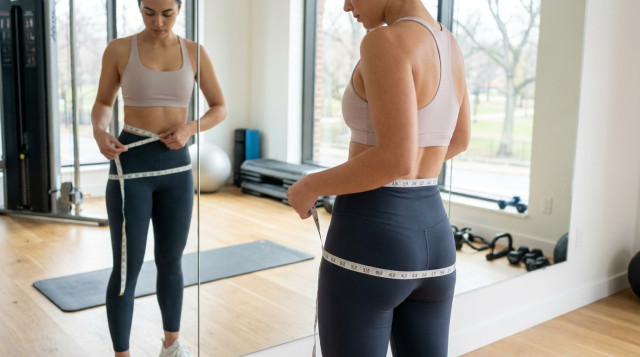
To get an accurate result, the measurement process must be precise. Small errors in where the tape measure is placed can lead to significant differences in the final ratio. You will need a flexible, non-stretchable measuring tape and a mirror to ensure the tape is level all the way around your body.
Measuring the Waist
The waist measurement should be taken at the narrowest part of the torso. For most people, this is located just above the belly button and below the rib cage. Stand up straight, exhale naturally, and wrap the tape around your waist. Ensure the tape is snug against the skin but not compressing it. It is important not to 'suck in' your stomach, as this will provide an inaccurate reading that does not reflect your true health status.
Measuring the Hips
The hip measurement is taken at the widest part of the buttocks. Stand with your feet together and wrap the tape around the fullest part of your hips. Again, ensure the tape is parallel to the floor. Using a mirror can help you verify that the tape hasn't slipped or tilted at the back. Accurate hip measurements are crucial because they serve as the denominator in the WHR formula, balancing the waist measurement to show the proportion of fat distribution.
The Waist-to-Hip Ratio Formula
The mathematical formula for determining this ratio is straightforward. It involves a simple division of two circumferences. You can use any unit of measurement (inches or centimeters) as long as you use the same unit for both the waist and the hips.
WHR = Waist Circumference / Hip Circumference
Because this is a ratio, the resulting number does not have a unit. It simply represents the relationship between the two measurements. For example, a ratio of 0.80 means the waist is 80% the size of the hips. Using a digital tool at https://calculatorr.com/ can help you perform this calculation instantly and avoid manual errors.
Step-by-Step Guide to Calculating Your WHR Manually
If you prefer to do the math yourself, follow these steps to ensure accuracy. Let's look at a practical example to illustrate the process.
Step 1: Record Your Measurements
Suppose a man measures his waist and hips with the following results:
- Waist: 38 inches
- Hips: 40 inches
Step 2: Apply the Formula
Divide the waist measurement by the hip measurement:
38 / 40 = 0.95
Step 3: Analyze the Result
In this case, the result is 0.95. This number indicates that the individual has a relatively high amount of abdominal fat compared to their hip size. For a woman, the calculation follows the exact same logic. If a woman has a 30-inch waist and 40-inch hips, her calculation would be:
30 / 40 = 0.75
Interpreting Your Waist-to-Hip Ratio Results
The World Health Organization (WHO) provides specific thresholds for interpreting WHR results. These thresholds differ between men and women because biological fat distribution naturally varies by sex. Understanding these categories helps in identifying potential health risks early.
WHR Standards for Men
For men, a waist-to-hip ratio of 0.90 or less is considered healthy. A ratio between 0.91 and 0.99 indicates a moderate risk, while a ratio of 1.0 or higher is classified as high risk. A ratio of 1.0 means the waist is exactly the same size as the hips, which is a strong indicator of significant abdominal fat accumulation.
WHR Standards for Women
For women, the healthy threshold is lower. A ratio of 0.80 or less is considered low risk. A ratio between 0.81 and 0.85 indicates moderate risk, and anything above 0.85 is considered high risk. Women naturally tend to have wider hips, so a higher ratio often points more directly to excess visceral fat than it might in men.
WHR vs. BMI: Which One is More Accurate?
While BMI is the most common tool for assessing weight, it has significant limitations. BMI does not distinguish between muscle and fat. An athlete with high muscle mass might be classified as 'overweight' by BMI standards, even if they have very little body fat. In contrast, the waist-to-hip ratio specifically targets fat distribution.
Medical studies have shown that WHR is often a better predictor of mortality and cardiovascular disease than BMI. This is because abdominal fat is metabolically active; it releases hormones and inflammatory substances that can lead to insulin resistance and heart problems. However, WHR also has limitations. It may not be accurate for people shorter than 5 feet tall, those with a BMI over 35, or during pregnancy. Using both metrics together provides a more comprehensive view of an individual's health status.
How to Use an Online Waist-to-Hip Ratio Calculator
Using an online calculator is the most efficient way to track your measurements over time. At https://calculatorr.com/, the process is designed to be user-friendly and precise. You simply select your gender, enter your waist measurement, and enter your hip measurement. The system automatically performs the division and provides an immediate interpretation based on current health guidelines.
Tracking your WHR monthly can be more motivating than just looking at the scale. If you are exercising and losing fat while gaining muscle, your weight might stay the same, but your waist-to-hip ratio will likely decrease. This shift indicates that you are successfully reducing dangerous abdominal fat and improving your body composition.
Common Mistakes When Measuring for WHR
To ensure your data is reliable, avoid these frequent errors during the measurement process:
- Measuring over clothing: Always measure against bare skin. Even thin fabric can add half an inch or more to your results.
- Holding your breath: Many people instinctively hold their breath or pull in their stomach. This creates a false reading. Breathe out naturally before taking the measurement.
- Incorrect tape tension: The tape should be flat against the skin but not tight enough to create an indentation. If the skin is bulging around the tape, it is too tight.
- Inconsistent timing: Body measurements can fluctuate throughout the day due to bloating or hydration levels. For the most consistent data, measure yourself in the morning before eating.
Tips for Improving Your Waist-to-Hip Ratio
If your WHR falls into the high-risk category, there are several lifestyle changes that can help lower it. Reducing abdominal fat requires a combination of dietary adjustments and physical activity.
Focus on Whole Foods
Diets high in processed sugars and refined carbohydrates are closely linked to increased abdominal fat. Focus on high-fiber foods, lean proteins, and healthy fats. Fiber, in particular, helps regulate blood sugar and keeps you feeling full longer, which can prevent overeating.
Incorporate Strength Training
While cardio is great for burning calories, strength training is essential for changing body composition. Building muscle increases your resting metabolic rate, helping you burn more fat even when you are not exercising. Compound movements like squats and deadlifts are particularly effective.
Manage Stress and Sleep
High levels of the stress hormone cortisol are directly linked to the storage of fat in the abdominal area. Ensuring you get 7-9 hours of quality sleep and practicing stress-reduction techniques like meditation can have a measurable impact on your waistline over time.