
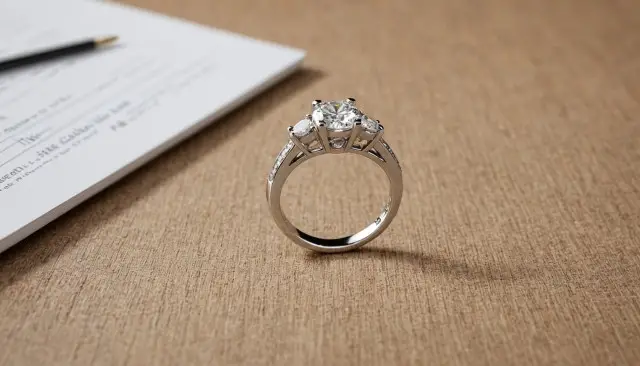
How to measure ring size at home accurately
Finding the perfect ring size is essential whether you are purchasing an engagement ring, a wedding band, or a simple accessory for yourself. A ring that is too tight can be uncomfortable and restrict blood flow, while one that is too loose risks slipping off and being lost. Measuring your finger at home is a practical and reliable way to determine your size before making an online purchase. By using a few household items and following a structured process, you can achieve professional-level accuracy.
The most important factor in ring sizing is consistency. Finger size can fluctuate based on the time of day, temperature, and even physical activity. To get the most accurate result, it is recommended to measure your finger at the end of the day when it is at its largest. Avoid measuring when you are very cold, as fingers can shrink up to half a size in lower temperatures. For the most reliable data, visit Calculatorr.com to use digital tools that simplify these conversions.
The math behind ring sizing: Circumference and diameter
Ring sizes are based on two primary measurements: the internal diameter and the internal circumference of the ring. Understanding the relationship between these two is the key to accurate sizing. In mathematical terms, the circumference is the total distance around the inside of the ring, while the diameter is the straight line passing through the center from one side to the other.
The formula for ring circumference
If you know the diameter of a ring that already fits you well, you can calculate the circumference using a simple geometric formula. The formula is:
Circumference = Diameter × π (3.14159)
For example, if the internal diameter of your ring is 17.3 millimeters, the calculation would be: 17.3 × 3.14159 = 54.35 millimeters. This circumference measurement corresponds to a specific size on standard charts, such as a US size 7. Knowing this formula allows you to verify measurements provided by jewelers or online sizing tools.
Step-by-step string and paper measurement method
One of the most common ways to find your ring size without professional tools is the string or paper method. This technique measures the circumference of your finger directly. You will need a piece of non-stretchy string or a thin strip of paper, a pen, and a ruler with millimeter markings.
First, wrap the string or paper around the base of the finger you intend to wear the ring on. It is crucial to ensure the material is snug but not tight. It should be able to slide over your knuckle with a bit of resistance. Once the string is positioned, use the pen to mark the exact point where the end meets the rest of the material. This creates a clear start and end point for your measurement.
Next, lay the string or paper flat against a ruler. Measure the distance from the starting end to the pen mark in millimeters. This number represents your finger's circumference. For instance, if the length is 52 millimeters, you can then look up this value on a conversion chart to find your corresponding size. Repeat this process three times to ensure you haven't made a mistake; if the numbers vary, take the average of the three measurements.
Measuring an existing ring for the perfect fit
If you already own a ring that fits the intended finger perfectly, measuring its internal diameter is often the most accurate home method. This eliminates the variables of how tight you pull the string or where exactly you place the paper strip. To do this, place the ring on a flat surface and use a ruler to measure the distance across the inside of the circle at its widest point.
Be careful not to include the thickness of the metal in your measurement; you only want the empty space inside. Most rulers have millimeter markings, which are necessary for this task because ring sizes often differ by only fractions of a millimeter. Once you have the diameter, you can use the formula mentioned earlier or input the value into a digital tool at Calculatorr.com to get your size instantly.
Using a ring size calculator for instant results
Manual calculations are useful, but using a dedicated ring size calculator reduces the margin for human error. These digital tools are designed to take your raw measurements—whether in diameter or circumference—and instantly convert them into the sizing standard used in your region. This is particularly helpful when shopping on international websites where sizes might be listed in US, UK, EU, or Japanese standards.
To use a calculator effectively, ensure your initial measurement is as precise as possible. A difference of just 1 millimeter can result in a full size difference. When you input your data into the tool, it cross-references your measurement against a database of global standards, providing you with a clear answer. This tool is especially valuable when you are between sizes, as it can help you decide whether to size up or down based on the specific millimeter count.
Factors that affect your ring size measurement
Your fingers are not static objects; they change shape and size throughout the day due to various biological and environmental factors. Ignoring these factors is one of the most common reasons people end up with rings that do not fit correctly. Understanding these nuances will help you choose the best time and method for measurement.
Temperature and time of day
Heat causes blood vessels to dilate, which can make your fingers swell. Conversely, cold weather causes them to contract. If you measure your finger on a very cold morning, the ring you buy might be too tight during the summer. It is best to measure your finger in the afternoon at room temperature. This provides a 'middle ground' measurement that should remain comfortable throughout the year.
Knuckle size and finger shape
Some people have knuckles that are significantly wider than the base of their finger. If this is the case for you, you must measure both the base and the knuckle and choose a size that falls in between. The ring needs to be large enough to slide over the knuckle but tight enough not to spin or fall off once it reaches the base. If your finger is tapered (wider at the base and narrower at the tip), a tighter fit is usually required to prevent the ring from sliding off.
How to find someone else's ring size secretly
Planning a surprise proposal or a gift requires knowing the recipient's ring size without asking them directly. One effective method is to 'borrow' a ring they already wear on the correct finger. Trace the inside of the ring on a piece of paper or press the ring into a bar of soap to create an impression. You can then measure the diameter of the circle you have created.
Another option is to enlist the help of a friend or family member who might already know the size or can find out discreetly. If all else fails, remember that it is generally easier to resize a ring down than it is to resize it up. Choosing a slightly larger size (the average for women is US 6 to 7, and for men is US 9 to 10) is often a safer bet for a surprise.
Common mistakes when measuring ring size
One of the most frequent errors is using a measuring tape designed for clothing. These tapes are often made of fabric or plastic that can stretch over time, leading to inaccurate readings. Always use a rigid ruler or a specialized metal ring sizer if available. Another mistake is measuring the wrong finger. Your dominant hand is often slightly larger than your non-dominant hand, so ensure you measure the exact finger where the ring will be worn.
Additionally, the width of the ring band affects the fit. A very wide band (over 6mm) will feel tighter than a thin, delicate band of the same size. If you are buying a wide 'cigar' style band, it is standard practice to order half a size larger than your measured size to ensure comfort. By keeping these details in mind and utilizing the resources at Calculatorr.com, you can shop for jewelry with confidence, knowing your new piece will fit perfectly from the moment it arrives.