
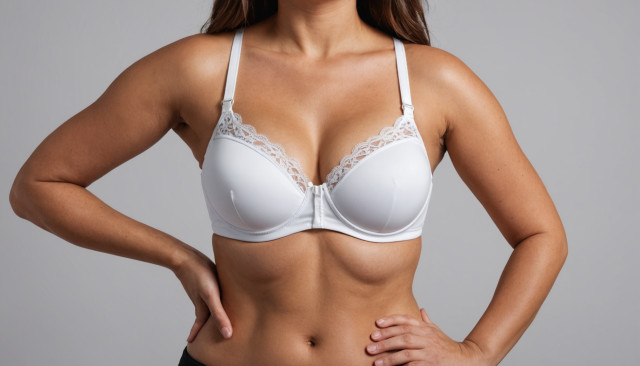
Why Accurate Bra Size Calculation Matters in 2026
Wearing the correct bra size is more than just a matter of fashion; it is a fundamental aspect of physical comfort and health. Statistics consistently show that a vast majority of individuals are wearing the wrong bra size, often leading to back pain, poor posture, and skin irritation. In 2026, with the rise of diverse body positivity and specialized athletic wear, understanding the specific math behind your proportions is essential for making informed purchasing decisions. Calculating your size at home allows you to navigate online shopping with confidence, ensuring that the garments you order provide the support they are designed for.
The process of finding your fit relies on two primary measurements: the underbust (band) and the overbust (cup). While many brands have slight variations in their manufacturing, the mathematical foundation remains the same. By mastering these calculations, you can use tools like those found at Calculatorr.com to quickly translate your physical dimensions into a standardized size that works across various international brands.
Essential Tools for Home Measurement
Before starting your calculation, you need to gather a few simple tools to ensure precision. Accuracy is the most important factor in this process, as a discrepancy of even half an inch can result in a poorly fitting garment. You will need a soft, flexible measuring tape (often called a tailor's tape). Avoid using metal construction tapes as they do not contour to the body and will provide false readings.
It is also helpful to have a mirror nearby to ensure the tape is level across your back. For the most accurate results, perform these measurements while wearing a non-padded bra or while shirtless. A padded bra will add artificial volume to your bust measurement, skewing the final cup size calculation. Ensure you have a notepad or a digital device ready to record your numbers immediately after measuring.
How to Calculate Your Band Size
The band size is the numerical part of your bra size (e.g., 32, 34, 36). It represents the circumference of your ribcage directly under your breasts. This part of the bra provides about 80% of the total support, so getting this number right is critical.
Step-by-Step Band Measurement
Exhale fully to ensure your ribcage is at its neutral state. Wrap the measuring tape around your torso, directly under your bust where the bra band would naturally sit. The tape should be snug against your skin but not so tight that it digs in or restricts your breathing. Ensure the tape is perfectly horizontal all the way around; if it dips at the back, your measurement will be larger than it actually is.
The Math Behind the Band Size
Once you have your measurement in inches, you may need to adjust it to find your label size. If your measurement is an even number, that is generally your band size. However, if your measurement is an odd number, you should typically round up to the nearest even number. For example, if you measure 33 inches, your starting band size is likely a 34. In the past, a 'plus four' rule was common, where users added four inches to their measurement. In 2026, most modern brands have adjusted their sizing to match actual ribcage measurements, so the direct measurement method is now considered the industry standard for accuracy.
How to Calculate Your Bust Measurement
The bust measurement is used to determine the volume of the breasts, which eventually dictates the cup letter. This measurement is taken at the fullest part of the chest.
Positioning the Measuring Tape
Wrap the tape around your back and across the fullest part of your bust, usually across the nipples. Unlike the band measurement, the tape should not be pulled tight here. It should be just tight enough to stay in place without compressing the breast tissue. Again, use a mirror to verify that the tape is level from front to back. If you have breasts that are slightly pendulous, it is often recommended to lean forward at a 90-degree angle so your chest is parallel to the floor; this ensures all breast tissue is accounted for in the measurement.
The Formula for Determining Cup Size
The cup size is not an absolute volume but a relative one. It represents the difference between your bust measurement and your band measurement. This is where most people become confused, but the formula is actually quite simple.
The Cup Size Formula
To find your cup size, use the following subtraction: Bust Measurement - Band Size = Cup Size Index. Each inch of difference corresponds to a letter in the alphabet. For example, if your bust measurement is 38 inches and your band size is 36 inches, the difference is 2 inches. According to the standard scale, a 2-inch difference corresponds to a 'B' cup. Therefore, your calculated size would be 36B.
Cup Size Conversion Scale
- 1 inch difference: A
- 2 inches difference: B
- 3 inches difference: C
- 4 inches difference: D
- 5 inches difference: DD (or E in some systems)
- 6 inches difference: DDD (or F)
- 7 inches difference: G
This scale continues through the alphabet. It is important to note that if your difference is less than one inch, you might require an AA cup, which is designed for very small differences between the ribcage and the bust volume.
Examples of Bra Size Calculations
To visualize how this works in practice, let's look at two common scenarios. In the first example, an individual measures 31 inches under the bust and 35 inches at the fullest part of the bust. Following the rounding rule, the 31-inch underbust becomes a 32 band. The calculation is 35 (bust) minus 32 (band), resulting in a 3-inch difference. This person would look for a 32C.
In a second example, an individual measures 36 inches under the bust and 41 inches at the fullest part. Since 36 is an even number, the band size remains 36. The calculation is 41 minus 36, which equals 5. Referring to the scale, a 5-inch difference is a DD. The resulting size is 36DD. These examples demonstrate how the relationship between the two numbers is more important than the individual measurements themselves.
What are Sister Sizes and How to Calculate Them?
One of the most useful concepts in fashion math is 'Sister Sizes.' These are groups of bra sizes that have the same cup volume even though the band size and cup letter are different. This is useful because different brands use different fabrics; some may be stretchier than others, requiring you to adjust your size while maintaining the same volume.
The rule for calculating sister sizes is: If you go up one band size, you must go down one cup letter. If you go down one band size, you must go up one cup letter. For example, if you are a 34C but the band feels too tight, your sister size with a larger band would be 36B. If the 34C band feels too loose, your sister size with a smaller band would be 32D. In all three cases (32D, 34C, 36B), the volume of the cup remains identical. Understanding this allows you to troubleshoot fit issues without losing the correct cup capacity.
How to Use an Online Bra Size Calculator for Precision
While manual calculation is excellent for understanding the logic of fit, using a digital tool at Calculatorr.com can eliminate human error and provide instant conversions for international sizing systems (such as switching between US, UK, and EU sizes). To use an online calculator, simply input your raw measurements in inches or centimeters. The algorithm will handle the rounding and the subtraction for you.
Online calculators are particularly helpful when you are dealing with 'half-sizes' or when you are between measurements. They can provide a recommended starting point and often suggest sister sizes automatically, saving you the time of doing the mental math during a shopping trip.
Signs Your Current Calculation is Incorrect
Even with a perfect calculation, the physical fit of a bra can be affected by the style (such as balconette, plunge, or full coverage). You should check for these signs to see if you need to recalculate: if the underwire is poking your breast tissue, the cup is too small. If the band is riding up your back, the band is too large. If there is a gap in the top of the cup, the cup size is likely too large or the shape is wrong for your anatomy. A perfectly calculated bra should sit level on your torso, with the center gore (the part between the cups) resting flat against your sternum.
Factors That Change Your Bra Size Over Time
It is a mistake to assume your bra size remains constant throughout your adult life. In fact, experts recommend recalculating your measurements every six months. Weight fluctuations, changes in fitness routines, hormonal shifts, and aging all impact the volume and density of breast tissue. By keeping a record of your measurements and using a calculator regularly, you ensure that your wardrobe always supports your current body shape, rather than a version of yourself from years ago. This proactive approach to fashion math ensures long-term comfort and confidence in your appearance.